
Fela Kuti biography – Explore the legendary Afrobeat pioneer’s life, his 27 wives, children including Femi Kuti, death from AIDS, activism, and musical revolution.
Who is Fela Kuti?
Fela Anikulapo Kuti (born Olufela Olusegun Oludotun Ransome-Kuti) stands as Africa’s most revolutionary musician and one of the continent’s most influential cultural icons. Born on October 15, 1938, in Abeokuta, Nigeria, and passing away on August 2, 1997, in Lagos, Fela pioneered Afrobeat—a genre that fused traditional Yoruba music with American funk, jazz, and highlife—while fearlessly challenging political oppression through his art.
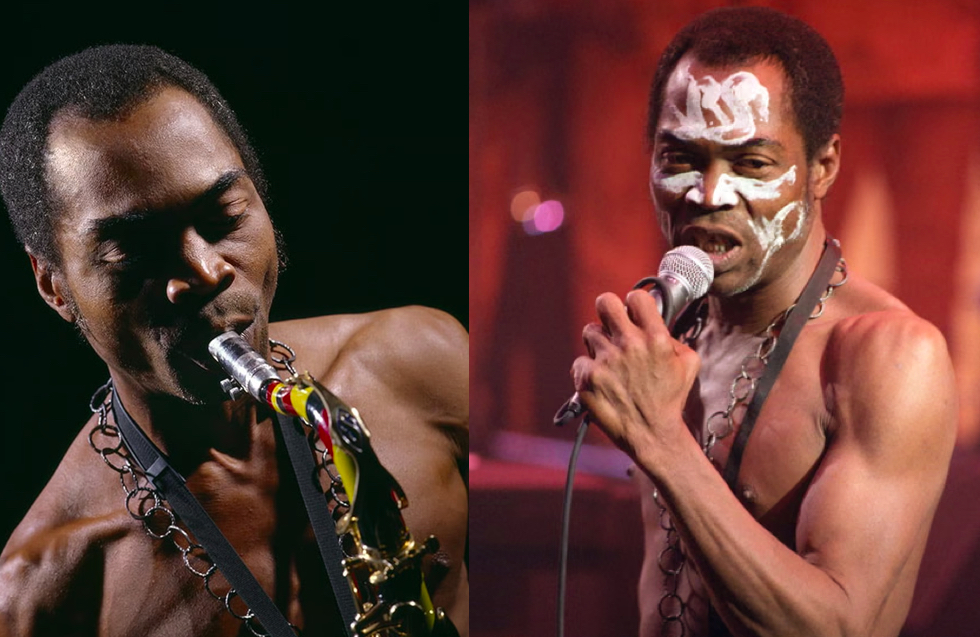
Known simply as “Fela” or “Black President,” this multi-instrumentalist, composer, bandleader, and political activist transformed African music and used his platform to condemn military dictatorships and colonial exploitation. His controversial lifestyle, including marrying 27 women simultaneously in 1978, his establishment of the independent Kalakuta Republic, and his relentless confrontations with Nigerian authorities, made him one of Africa’s most talked-about personalities.
Fela’s mother, Funmilayo Ransome-Kuti, was a renowned women’s rights activist, while his father served as an Anglican priest. This unique background of religious conservatism and radical activism shaped Fela’s worldview and fueled his commitment to Pan-Africanism, anti-imperialism, and social justice. His legacy continues through his children, particularly sons Femi and Seun Kuti, who carry forward the Afrobeat tradition.
Quick Facts About Fela Kuti
| Category | Details |
|---|---|
| Full Name | Olufela Olusegun Oludotun Ransome-Kuti |
| Stage Name | Fela Anikulapo Kuti, Fela Kuti |
| Date of Birth | October 15, 1938 |
| Place of Birth | Abeokuta, Nigeria |
| Date of Death | August 2, 1997 (Age 58) |
| Cause of Death | AIDS-related complications |
| Father | Reverend Israel Oludotun Ransome-Kuti |
| Mother | Chief Funmilayo Ransome-Kuti |
| First Wife | Remilekun (Remi) Taylor (m. 1960) |
| 27 Wives | Married simultaneously in 1978 |
| Famous Children | Femi Kuti, Yeni Kuti, Seun Kuti, Sola Kuti |
| Music Genre | Afrobeat (Pioneer) |
| Instruments | Saxophone, Keyboards, Trumpet, Guitar |
| Famous Songs | “Zombie,” “Lady,” “Shakara,” “Water No Get Enemy” |
| Arrests | Over 200 times |
Family Background and Early Years
Fela was born into one of Nigeria’s most prominent families in Abeokuta, a Yoruba town in western Nigeria. His father, Reverend Israel Oludotun Ransome-Kuti, was an Anglican priest and accomplished pianist who served as the first president of the Nigeria Union of Teachers. Despite his religious profession, he encouraged young Fela to learn music as part of a well-rounded education.
His mother, Chief Funmilayo Ransome-Kuti, was a towering figure in Nigerian politics and women’s rights activism. She founded the Abeokuta Women’s Union and the Nigerian Women’s Union, leading the famous 1948 women’s revolt against taxation in Abeokuta. A friend to Ghana’s Kwame Nkrumah and winner of the Lenin Peace Prize, she was arguably Nigeria’s most famous female nationalist by independence in 1960.
Fela’s brothers also achieved prominence—Beko Ransome-Kuti and Olikoye Ransome-Kuti became renowned doctors and activists. Fela was also first cousin to Wole Soyinka, who would become the first African to win the Nobel Prize for Literature in 1986.
Growing up in this intellectually stimulating and politically conscious household profoundly influenced Fela’s worldview. The combination of his father’s musical encouragement and his mother’s fearless activism created the foundation for his future as both artist and revolutionary.
Education and Musical Formation
Fela attended Abeokuta Grammar School for his secondary education. Upon graduation, his parents sent him to London in 1958 to study medicine, following the family tradition of professional excellence. However, Fela had different plans.
Once in London, he defied his parents’ wishes and enrolled at Trinity College of Music instead. There, he studied classical music and chose the trumpet as his primary instrument, though he would later master saxophone, keyboards, and various percussion instruments. This formal Western musical training would prove crucial in his later fusion of jazz, funk, and traditional African rhythms.
While studying in London, Fela formed his first band, initially called “Fela Ransome-Kuti and His Highlife Rakers,” which later became “Koola Lobitos.” The band played a blend of highlife and jazz with Caribbean influences, recording four sides for Melodisc, one of Britain’s first independent African and Caribbean music labels.
During his London years, Fela met Remilekun (Remi) Taylor, a British-born woman of Nigerian and African American heritage. They married in 1960, and their union produced three children: Yeni (born 1961), Femi (born 1962), and Sola.
Return to Nigeria and Birth of Afrobeat
In 1963, following Nigeria’s independence, Fela returned home with Remi and their young family. He reformed Koola Lobitos and secured a position as a radio producer at the Nigerian Broadcasting Corporation (NBC). However, his outspoken nature led to his dismissal from NBC.
The late 1960s proved transformative for Fela’s musical direction. In 1969, he toured the United States, where exposure to the Black Power movement, Malcolm X’s teachings, and the Black Panthers radicalized his political consciousness. This American sojourn fundamentally altered his music’s direction and political content.
He returned to Nigeria in 1970 with a new vision. He renamed his band “Africa 70” (later “Africa 70” then “Egypt 80”) and formally launched what he called “Afrobeat”—a revolutionary sound combining Fuji music, funk, jazz, highlife, salsa, calypso, and traditional Yoruba rhythms. His songs, typically ranging from 15 minutes to an hour long, featured complex polyrhythmic structures, extended instrumental solos, and politically charged lyrics sung in Pidgin English and Yoruba.
Drummer Tony Allen became Fela’s musical director and collaborator, providing the intricate rhythmic foundation that defined Afrobeat’s distinctive pulse. Their partnership created some of African music’s most influential recordings.
The Kalakuta Republic and Political Activism
In 1970, Fela established the Kalakuta Republic, a communal compound in Lagos that he declared independent from Nigeria. This commune became his home, recording studio, and headquarters for his increasingly radical political activities. He proclaimed himself president of this “republic” and used it as a base for organizing against government corruption and military oppression.
Kalakuta housed band members, dancers, friends, and hangers-on in a utopian experiment that challenged conventional Nigerian society. Fela promoted communal living, sexual freedom, and marijuana use, positioning himself as both musical innovator and social revolutionary.
His 1977 song “Zombie” proved particularly inflammatory, satirizing Nigerian soldiers as mindless automatons who blindly followed orders. The military junta took offense, and on February 18, 1977, approximately 1,000 soldiers raided the Kalakuta Republic in a brutal assault that destroyed the compound.
During this raid, Fela suffered a fractured skull and broken limbs. Most tragically, soldiers threw his 78-year-old mother, Funmilayo Ransome-Kuti, from a second-floor window, causing injuries that led to her death in 1978. The government burned Kalakuta to the ground, and Fela later delivered his mother’s coffin to the army barracks in protest.
The 27 Wives Controversy
In 1978, following his mother’s death and while in exile in Ghana, Fela made international headlines by simultaneously marrying 27 women—dancers and singers from his band—in a traditional Yoruba ceremony. This mass wedding shocked both Nigerian society and international observers.
The wives included Laide Anikulapo-Kuti (his choreographer), Najite Olokun, and 25 others whose names included Kikelomo Oseyni, Sewaa Kuti, Folake Oladejo, Fehintola Anikulapo Kuti, and many more. Fela justified this decision as a rejection of Western colonial morality and an embrace of traditional African polygamy.
However, the arrangement proved controversial and unstable. Some wives reportedly suffered physical abuse, and rumors of infidelity circulated. In 1986, upon his release from prison, Fela divorced all 12 remaining wives, stating that marriage caused jealousy and that he preferred women to stay with him voluntarily rather than through legal bonds.
Despite the controversy, these relationships produced several children who joined his earlier offspring from his marriage to Remi Taylor.
Musical Output and Famous Works
Between 1969 and 1997, Fela released over 50 albums, creating a body of work that remains influential decades after his death. His songs combined infectious grooves with biting social commentary, making dancing and political consciousness inseparable.
Classic albums and songs include:
- “Zombie” (1977) – His most famous work, comparing soldiers to mindless zombies
- “Shakara” (1972) – Criticizing pretentious behavior and fake sophistication
- “Lady” (1972) – Controversial commentary on African women adopting Western feminism
- “Water No Get Enemy” (1975) – Philosophical reflection using water as metaphor
- “Sorrow Tears and Blood” (1977) – About government violence against citizens
- “Coffin for Head of State” (1980) – Commemorating his mother’s death
- “Beasts of No Nation” (1989) – Attacking world leaders including Reagan and Thatcher
- “Teacher Don’t Teach Me Nonsense” (1987) – Criticizing colonial education
His performances at the Shrine, his Lagos nightclub, became legendary. Shows often started after midnight and continued until dawn, with Fela performing shirtless or in minimal clothing, surrounded by his dancers and band creating hypnotic, trance-inducing music.
Arrests, Imprisonment, and Persecution
Fela’s confrontational politics made him a perpetual target of Nigerian military governments. Throughout his career, he was arrested over 200 times on various charges—many obviously politically motivated. Amnesty International repeatedly declared him a “prisoner of conscience.”
His most serious imprisonment came in 1984 when the military government charged him with currency smuggling. Fela maintained his innocence, claiming the charges were fabricated to silence his criticism. He spent 20 months in prison before General Ibrahim Babangida released him in 1986.
During these years of persecution, Fela never wavered in his activism. In 1979, he formed the Movement of the People (MOP), a political party, and ran unsuccessfully for Nigeria’s presidency. His campaigns used his music as political rallying cries, attracting massive followings among Nigeria’s youth and working classes.
Children and Musical Legacy
Fela’s children have continued his musical and activist legacy:
Yeni Anikulapo-Kuti (born 1961), his eldest child, sang and danced with Egypt 80 in the 1980s and later with Femi’s band The Positive Force. She founded the annual Felabration festival in 1998 to celebrate her father’s life and birthday, and co-directs the New Afrika Shrine in Lagos with her brother Femi.
Femi Anikulapo-Kuti (born 1962) left his father’s band in 1986 to form The Positive Force. He has become an internationally recognized Afrobeat artist in his own right, earning multiple Grammy nominations and continuing his father’s tradition of political music and activism.
Seun Anikulapo-Kuti (Fela’s youngest son) took over Egypt 80 after Fela’s death, maintaining the band and his father’s musical approach. Like Femi, Seun has earned Grammy nominations and tours internationally.
Sola Kuti tragically died in 1997, the same year as her father.
Fela’s grandchildren, including Made Kuti (Femi’s son), continue the family musical tradition, ensuring the Afrobeat legacy spans four generations.
Death and Funeral
Fela died on August 2, 1997, at age 58, from complications related to AIDS. His brother, Olikoye Ransome-Kuti (a prominent AIDS activist and former Nigerian Minister of Health), announced his death on August 3, 1997.
Fela had been HIV-positive for several years and had released songs like “Sorrow Tears and Blood” partly to raise AIDS awareness, though he reportedly resisted treatment. His lifestyle of heavy marijuana use, multiple sexual partners, and resistance to conventional medicine likely contributed to his health’s deterioration. He also suffered from diabetes and respiratory problems.
His funeral on August 7, 1997, attracted over one million people—one of the largest in Nigerian history. His remains were displayed in a five-sided glass coffin for public viewing at the Tafawa Balewa Square in Lagos before burial at the old Shrine compound. The massive turnout demonstrated his enduring impact on Nigerian culture and politics.
Global Influence and Cultural Impact
Since Fela’s death, his influence has only grown. In 1999, Universal Music France remastered and re-released 45 of his albums on 26 CDs, introducing his music to new global audiences. His catalog continues generating sales worldwide, particularly in Europe, America, and Japan.
The 2009 Broadway musical “Fela!” produced by Jay-Z and Will Smith, became a massive success, earning 11 Tony Award nominations. The show, starring Sahr Ngaujah, introduced Fela’s life and music to mainstream American audiences.
Contemporary artists across genres cite Fela’s influence. Bands like Antibalas carry the Afrobeat banner forward, while artists from Questlove to Erykah Badu acknowledge his impact. Nigerian stars like Burna Boy, Wizkid, and Davido all trace their musical lineage to Fela’s innovations.
The annual Felabration festival continues attracting thousands to Lagos each October, celebrating Fela’s birthday with concerts, lectures, and art exhibitions. The New Afrika Shrine, rebuilt after the original’s destruction, serves as Afrobeat’s spiritual home.
Common Questions About Fela Kuti
How did Fela Kuti die?
Fela Kuti died on August 2, 1997, from complications related to AIDS at age 58. His brother Olikoye Ransome-Kuti, a prominent AIDS activist, announced his death, confirming he had been HIV-positive for several years.
How many wives did Fela Kuti have?
Fela famously married 27 women simultaneously in a traditional ceremony in 1978. He later divorced 12 remaining wives in 1986 after his release from prison, stating marriage caused jealousy and he preferred voluntary relationships.
Who are Fela Kuti’s most famous children?
His most famous children are Femi Kuti (internationally acclaimed Afrobeat musician), Seun Kuti (who leads Egypt 80), and Yeni Kuti (founder of Felabration festival). All three continue his musical and activist legacy.
What is Afrobeat music?
Afrobeat is the revolutionary genre Fela created by combining traditional Yoruba percussion and rhythms with American funk, jazz, highlife, and salsa. Songs typically featured extended instrumental sections, complex polyrhythms, and political lyrics in Pidgin English and Yoruba.
Why was Fela Kuti arrested so many times?
Fela was arrested over 200 times by Nigerian military governments who viewed his politically critical music as threatening. Charges ranged from marijuana possession to currency smuggling, with Amnesty International declaring him a “prisoner of conscience.”
What happened to the Kalakuta Republic?
On February 18, 1977, approximately 1,000 Nigerian soldiers raided Fela’s Kalakuta Republic commune, severely beating him, throwing his mother from a window (leading to her death), and burning the compound to the ground in retaliation for his song “Zombie.”